
Cooking salmon can feel a little intimidating at first. You’ve probably asked yourself: Is it done yet? Is it overcooked? Why is it dry this time?
The truth is, mastering salmon comes down to one key factor.temperature. Once you understand the right salmon temperature, everything else becomes much easier.
In this guide, I’ll walk you through exactly how to cook salmon to perfection, whether you’re baking, grilling, or pan-searing. By the end, you’ll feel confident enough to cook restaurant-quality salmon right in your own kitchen.
Why Salmon Temperature Matters
Let’s start with the basics.
Salmon is a delicate fish. Unlike beef or chicken, it can go from perfectly tender to dry and flaky in just a couple of minutes. That’s why temperature control is everything.
When cooked properly, salmon should be:
- Moist and juicy
- Slightly flaky
- Soft in the center
- Full of flavor
If the temperature goes too high, you’ll end up with dry, chalky fish. Too low, and it may be undercooked.
Ideal Internal Salmon Temperature
The golden rule for salmon is simple:
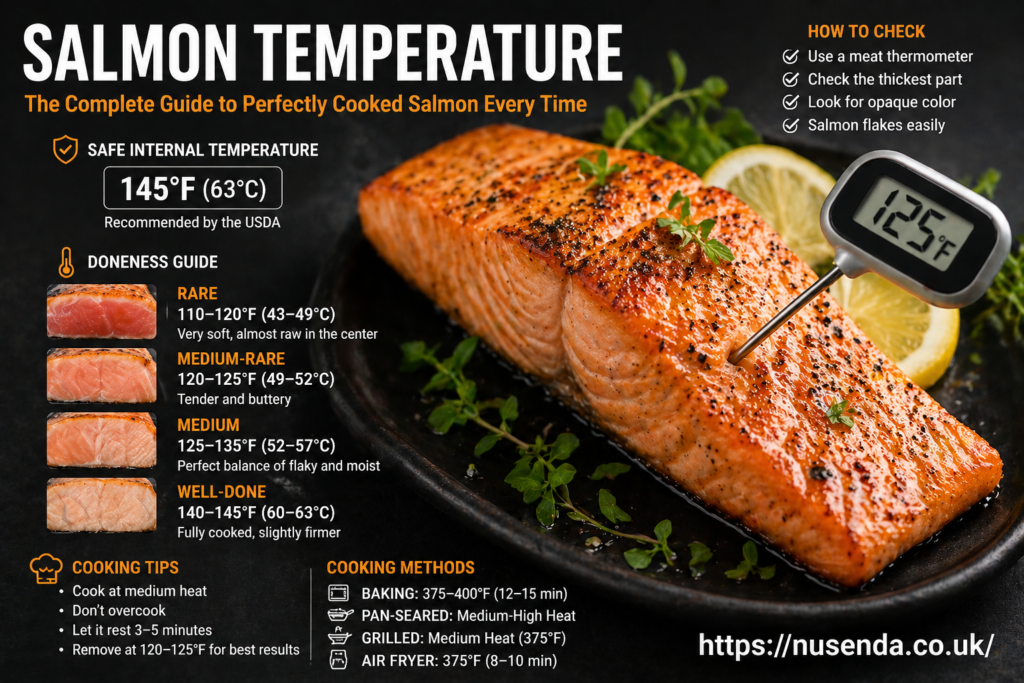
- Recommended internal temperature: 145°F (63°C)
This is the safe temperature suggested by food safety guidelines. However, many chefs prefer slightly lower temperatures for better texture.
Common Doneness Levels:
- Rare: 110–120°F (43–49°C)
Very soft, almost raw in the center - Medium-rare: 120–125°F (49–52°C)
Tender and buttery - Medium: 125–135°F (52–57°C)
Perfect balance of flaky and moist - Well-done: 140–145°F (60–63°C)
Fully cooked but slightly firmer
If you want that melt-in-your-mouth texture, aim for 125°F (52°C) and let it rest for a few minutes.
How to Check Salmon Temperature
You don’t need fancy tools.but a thermometer helps a lot.
Best methods:
- Use a meat thermometer
Insert it into the thickest part of the fish. - Check flakiness
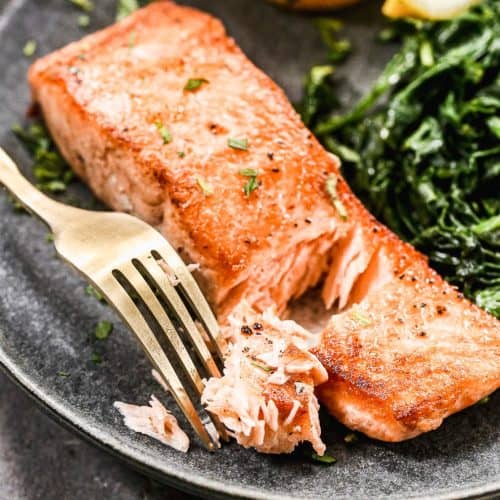
Use a fork—if it flakes easily, it’s close to done. - Look at color
Cooked salmon changes from translucent to opaque. - Touch test
It should feel firm but still slightly soft in the center.
Cooking Methods and Their Ideal Temperatures
Different cooking styles affect how salmon temperature cooks. Let’s break them down.
Baking Salmon
Baking is one of the easiest methods.
- Oven temperature: 375–400°F (190–200°C)
- Cooking time: 12–15 minutes
Tips:
Pan-Seared Salmon
This method gives you that crispy skin everyone loves.
- Start with medium-high heat
- Cook skin-side down first
- Flip once and finish cooking
Tips:
- Don’t move the fish too much
- Let the skin crisp up naturally
Grilled Salmon
Perfect for smoky flavor.
- Grill temperature: Medium heat (around 375°F / 190°C)
- Oil the grates to prevent sticking
Tips:
- Use thicker cuts
- Flip carefully to avoid breaking the fish
Air Fryer Salmon
Quick and convenient.
- Temperature: 375°F (190°C)
- Time: 8–10 minutes
Tips:
- Preheat the air fryer
- Lightly oil the salmon
Common Mistakes to Avoid
Even experienced cooks mess this up sometimes. Here are the most common mistakes:
- Overcooking
The biggest mistake. Salmon keeps cooking after you remove it from heat. - Skipping resting time
Let it rest for 3–5 minutes before serving. - Cooking straight from the fridge
Let salmon sit at room temperature for 10–15 minutes first. - Using too high heat
This dries out the fish quickly.
How to Keep Salmon Moist and Juicy
Want that perfect, restaurant-style texture? Keep these tips in mind:
- Cook at moderate temperatures
- Use butter or olive oil
- Don’t overcook
- Cover while baking
- Add citrus for freshness
A little attention goes a long way.
Wild vs Farmed Salmon: Does Temperature Change?
Good question.and the answer is no.
Whether you’re cooking wild or farmed salmon, the ideal internal temperature stays the same.
However, there are slight differences:
- Wild salmon
Leaner, cooks faster, can dry out quickly - Farmed salmon
Higher fat content, more forgiving
So if you’re cooking wild salmon, keep an even closer eye on the temperature.
Carryover Cooking Explained
Here’s something many people don’t realize.
When you remove salmon from heat, it keeps cooking. This is called carryover cooking.
That means:
- If you want 125°F, remove it at around 120°F
- The temperature will rise as it rests
This small trick can make a huge difference.
Serving Suggestions
Once your salmon is perfectly cooked, it’s time to serve.
Great pairings include:
- Steamed vegetables
- Rice or quinoa
- Mashed potatoes
- Fresh salad
Add a squeeze of lemon or a light sauce, and you’re good to go.
FAQs About Salmon Temperature
What is the safest temperature for salmon?
The safest internal temperature is 145°F (63°C), as recommended by food safety guidelines.
Can salmon be eaten medium-rare?
Yes, many people prefer salmon at 120–125°F for a softer, more tender texture.
How do I know if salmon is overcooked?
Overcooked salmon looks dry, flakes too easily, and may have white residue on the surface.
Should I cook salmon skin-side down first?
Yes, especially when pan-searing. It helps create crispy skin and protects the flesh.
Does salmon continue cooking after removal?
Yes, due to carryover cooking. Always remove it slightly before your target temperature.
Final Thoughts
Cooking salmon doesn’t have to be stressful. Once you understand the right salmon temperature, everything clicks into place.
Think of it like this: temperature is your guide, not time. Focus on hitting that perfect internal range, and you’ll consistently get juicy, flavorful results.
Whether you prefer it medium-rare or fully cooked, the key is paying attention and not rushing the process.
So next time you’re in the kitchen, grab your thermometer, trust the process, and enjoy perfectly cooked salmon every time.