
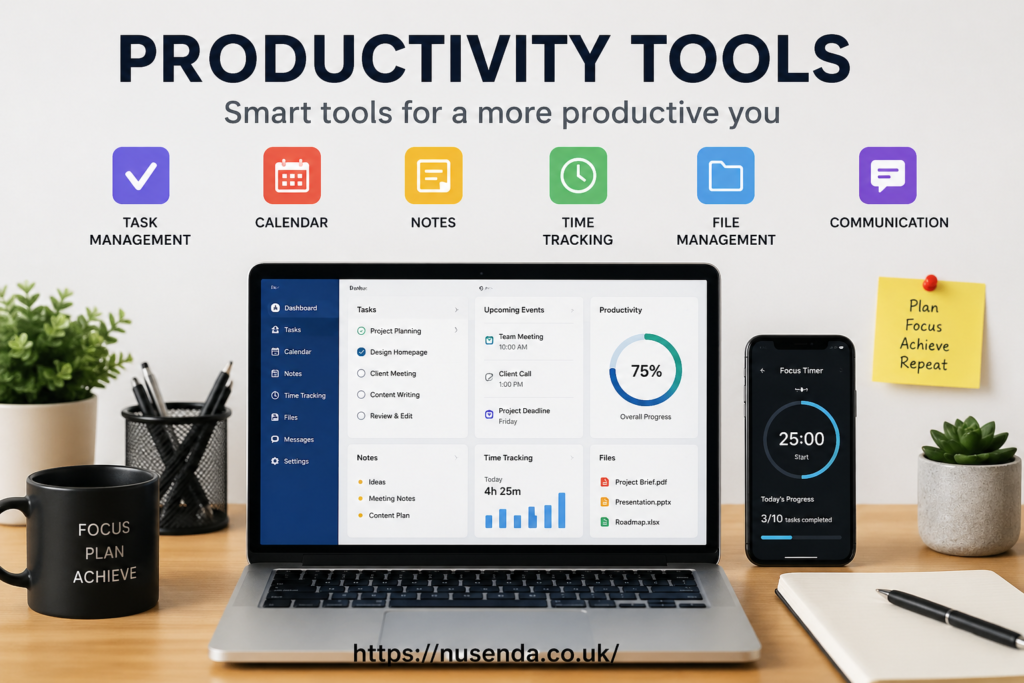
Let’s be honest.staying productive isn’t always easy. Between constant notifications, endless to-do lists, and mental fatigue, it’s easy to feel overwhelmed. That’s where productivity tools come in.
Productivity tools are apps, software, or systems designed to help you manage time, organize tasks, and work more efficiently. Whether you’re a student, freelancer, or business owner, these tools can simplify your workflow and help you get more done with less stress.
But here’s the key: productivity tools don’t just make you busy.they help you become effective.
The Real Benefits of Using Productivity Tools
Before diving into specific tools, it’s important to understand what makes them valuable. When used correctly, productivity tools can completely change how you work.
Here’s what you gain:
- Better time management – Know exactly what to do and when
- Improved focus – Reduce distractions and stay on track
- Task clarity – Break big goals into manageable steps
- Collaboration – Work smoothly with teams or clients
- Reduced stress – Feel more in control of your workload
Instead of juggling everything in your head, you create a system that supports you.
Types of Productivity Tools You Should Know
Not all THE s are the same. In fact, they serve different purposes depending on your needs.
Let’s break them down.
Task Management Tools
These tools help you organize, prioritize, and track your tasks.
Popular options include:
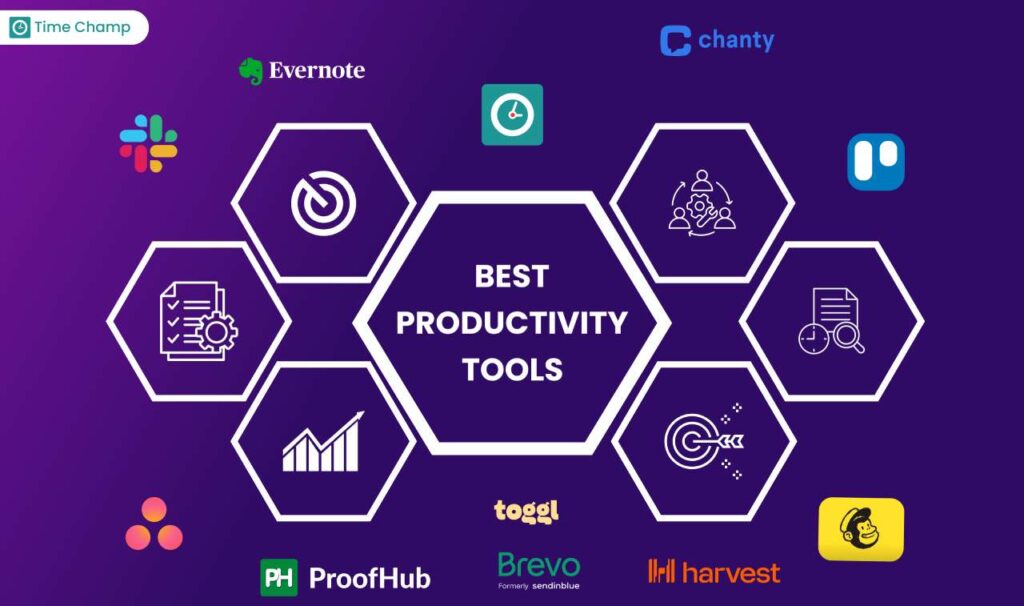
- Todoist
- Trello
- Asana
They’re perfect for creating to-do lists, setting deadlines, and keeping everything in one place.
Time Tracking Tools
Ever feel like your day disappears without results? Time tracking tools fix that.
Some well-known ones:
- Toggl
- Clockify
These tools show exactly where your time goes, helping you identify distractions and improve efficiency.
Note-Taking Tools
Ideas come and go quickly. A good note-taking app ensures you never lose them.
Top picks include:
- Evernote
- Notion
From quick notes to detailed plans, these tools keep your thoughts organized.
Focus and Distraction-Blocking Tools
Staying focused is one of the biggest challenges today.
Helpful tools include:
- Forest
- Freedom
They help you avoid distractions and stay committed to your work sessions.
Communication and Collaboration Tools
If you work with others, communication tools are essential.
Common choices:
- Slack
- Microsoft Teams
These tools make teamwork faster and more organized.
How to Choose the Right Productivity Tools
With so many options available, it’s easy to feel overwhelmed. The truth is.you don’t need all of them.
Here’s how to choose wisely:
- Identify your biggest problem (time, focus, organization)
- Start with one or two tools only
- Pick tools that integrate easily
- Avoid overly complex platforms
- Focus on usability, not popularity
Remember, the goal is simplicity.not overload.
Building a Simple Productivity System
Instead of using random tools, it’s better to build a system.
Here’s a simple structure that works for most people:
- Task manager (like Todoist)
- Note-taking app (like Notion)
- Focus tool (like Forest)
- Calendar (Google Calendar or similar)
This combination covers planning, execution, and tracking.without overcomplicating things.
Common Mistakes People Make
Even the best tools won’t help if used incorrectly. Here are some common mistakes to avoid:
- Using too many tools at once
- Spending more time organizing than working
- Constantly switching apps
- Ignoring consistency
- Expecting tools to fix everything
Productivity tools are support systems, not magic solutions.
Productivity Tools for Different Needs
Different lifestyles require different tools.
For Students
- Note-taking apps
- Study timers
- Task planners
For Freelancers
- Time tracking tools
- Project management apps
- Communication platforms
For Business Owners
- Team collaboration tools
- Workflow automation
- Analytics dashboards
Choosing tools based on your role makes a big difference.
The Role of Discipline vs Tools
Here’s something important: tools don’t replace discipline.
You can have the best apps in the world, but without consistency, they won’t work.
Think of productivity tools like a gym membership.they help, but you still have to show up.
How to Stay Consistent with Productivity Tools
Consistency is what turns tools into results.
Try these tips:
- Set a daily routine
- Review tasks every morning
- Keep your system simple
- Avoid unnecessary features
- Track progress weekly
The simpler your system, the easier it is to stick with it.
The Future of Productivity Tools
Productivity tools are evolving fast. With AI integration and smarter automation, tools are becoming more intuitive.
In the future, we can expect:
- Personalized productivity suggestions
- Automated task management
- Smarter scheduling
- Better focus tracking
But even with advanced technology, the core principle remains the same.clarity and consistency.
FAQs About Productivity Tools
What are productivity tools used for?
Productivity tools help you manage tasks, track time, stay organized, and improve efficiency in both personal and professional work.
Are productivity tools free?
Many tools offer free versions with basic features. Premium plans usually provide advanced options and integrations.How many productivity tools should I use?
Ideally, 2–4 tools are enough. Using too many can create confusion and reduce efficiency.
Can productivity tools improve focus?
Yes, especially tools designed to block distractions or structure work sessions.
Are productivity tools useful for students?
Absolutely. They help students manage assignments, take notes, and stay organized.
Do productivity tools replace discipline?
No. They support your workflow, but consistency and effort are still required.
Final Thoughts
Productivity tools can completely transform how you work—but only if you use them wisely. It’s not about downloading every trending app. It’s about finding what works for you.
Start small. Stay consistent. Focus on clarity.
Because at the end of the day, productivity isn’t about doing more.it’s about doing what matters, better.