
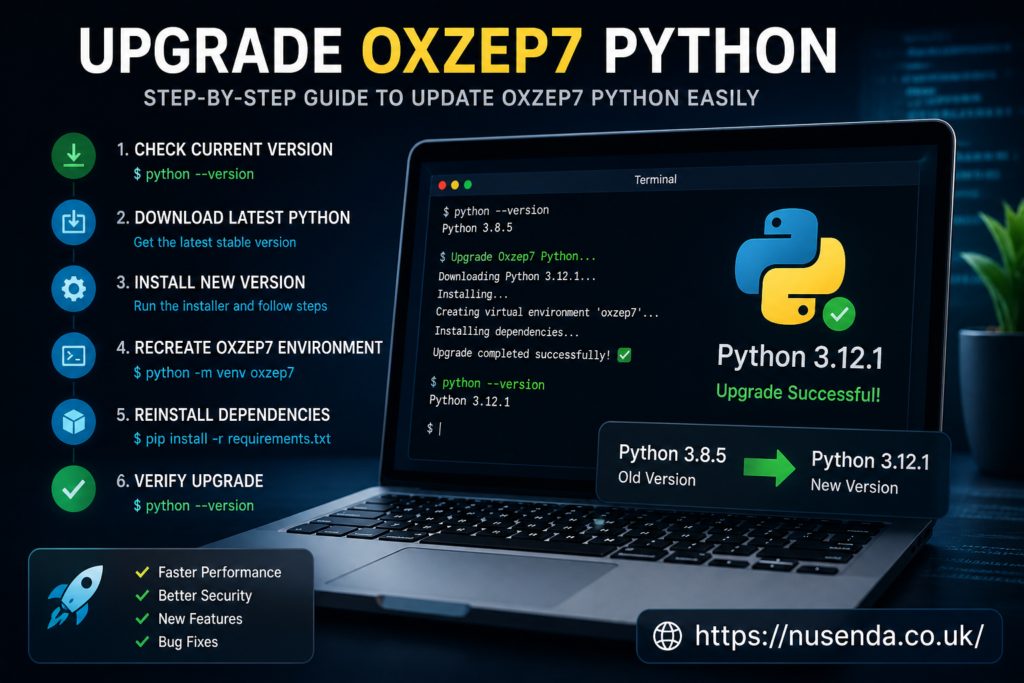
If you’ve been searching for upgrade oxzep7 python, you’re probably trying to update a specific Python environment, package, or custom setup tied to “oxzep7.” While the name might sound unusual, it typically refers to a custom Python build, script, or environment configuration that needs updating.
Let me break it down in simple terms.
Upgrading Python—whether it’s a standard installation or something like oxzep7.means moving to a newer version to get:
- Better performance
- Improved security
- New features
- Compatibility with modern libraries
Think of it like updating your smartphone. Everything runs smoother, and you get access to new tools.
Why Upgrading Python Matters
You might wonder, “If everything is working, why upgrade?”
That’s a fair question. But sticking to an old version can cause problems over time.
Here’s why upgrading matters:
- Security patches: Older versions may have vulnerabilities
- Library compatibility: New packages often require newer Python versions
- Performance improvements: Faster execution and better memory usage
- Bug fixes: Developers constantly improve stability
If you’re working with something like oxzep7, updates become even more important because custom environments can break easily if outdated.
Understanding the Oxzep7 Environment
Before upgrading, it’s important to understand what “oxzep7” might represent.
In most cases, it could be:
- A custom Python project name
- A virtual environment
- A script or automation tool
- A third-party framework or modified Python setup
Because it’s not a standard term, your upgrade oxzep7 python process depends on how it’s configured.
So, step one is always this:
👉 Identify whether oxzep7 is a Python version, environment, or package.
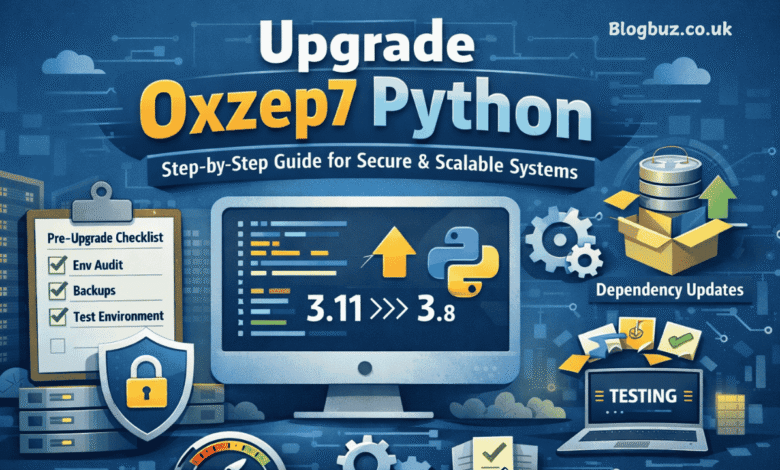
How to Check Your Current Python Version
Before upgrading, you need to know where you stand.
Open your terminal or command prompt and type:
python –version
Or:
python3 –version
This tells you your current version.
If oxzep7 is tied to a virtual environment, activate it first:
source oxzep7/bin/activate # Linux/Mac
oxzep7\Scripts\activate # Windows
Then check the version again.
Step-by-Step Guide to Upgrade Oxzep7 Python
Now let’s get into the practical part.
Step 1: Backup Your Environment
Before making any changes:
- Save your project files
- Export dependencies
pip freeze > requirements.txt
This ensures you can restore everything if something breaks.
Step 2: Download the Latest Python Version
Go to the official Python website and download the latest version.
Make sure to:
- Choose the correct OS version
- Enable “Add Python to PATH” during installation
Step 3: Install the New Python Version
Run the installer and complete the setup.
After installation, verify:
python –version
Step 4: Recreate the Oxzep7 Environment
If oxzep7 is a virtual environment, it’s best to rebuild it.
python -m venv oxzep7
Activate it:
source oxzep7/bin/activate
Step 5: Reinstall Dependencies
Now bring everything back:
pip install -r requirements.txt
This restores your working environment with the updated Python version.
Common Errors and How to Fix Them
Upgrading isn’t always smooth. Here are some common issues:
Version Conflicts
Some libraries may not support the new Python version.
Fix:
Update or replace incompatible packages.
PATH Issues
Your system may still point to the old Python version.
Fix:
Update environment variables or reinstall Python with PATH enabled.
Broken Virtual Environment
Old environments sometimes stop working.
Fix:
Delete and recreate the environment.
Permission Errors
Especially common on Linux/macOS.
Fix:
Use:
sudo pip install package-name
Best Practices for Upgrading Python
If you want a smooth experience, follow these tips:
- Always backup your environment
- Use virtual environments for projects
- Upgrade in a test environment first
- Keep your dependencies updated
- Read release notes before upgrading
These small steps can save hours of troubleshooting.
Tools That Make Upgrading Easier
Here are some helpful tools:
- pyenv – Manage multiple Python versions
- virtualenv – Create isolated environments
- pipenv – Combine dependency management and environments
- conda – Great for data science setups
Using these tools gives you more control over your setup.
When Should You Upgrade?
Timing matters.
You should upgrade oxzep7 python when:
- Your current version is outdated
- You need new features
- A library requires a newer version
- Security updates are released
Avoid upgrading in the middle of critical projects unless necessary.
Benefits After Upgrading Oxzep7 Python
Once everything is updated, you’ll notice:
- Faster execution
- Better compatibility
- Fewer bugs
- Access to modern libraries
It might feel like a small change, but it makes a big difference in the long run.
FAQs
What is oxzep7 in Python?
It’s likely a custom environment, project name, or configuration rather than an official Python version.
Is it safe to upgrade oxzep7 python Python?
Yes, as long as you back up your environment and follow proper steps.
Will upgrading break my projects?
It can, especially if dependencies are outdated. Always test after upgrading.
How long does the upgrade take?
Usually 10–30 minutes, depending on your setup and internet speed.
Can I have multiple Python versions installed?
Yes, tools like pyenv allow you to manage multiple versions easily.